22,538 people live in Santa Ynez Valley, where the median age is 49 and the average individual income is $68,037. Data provided by the U.S. Census Bureau.
Total Population
Median Age
Population Density Population Density This is the number of people per square mile in a neighborhood.
Average individual Income
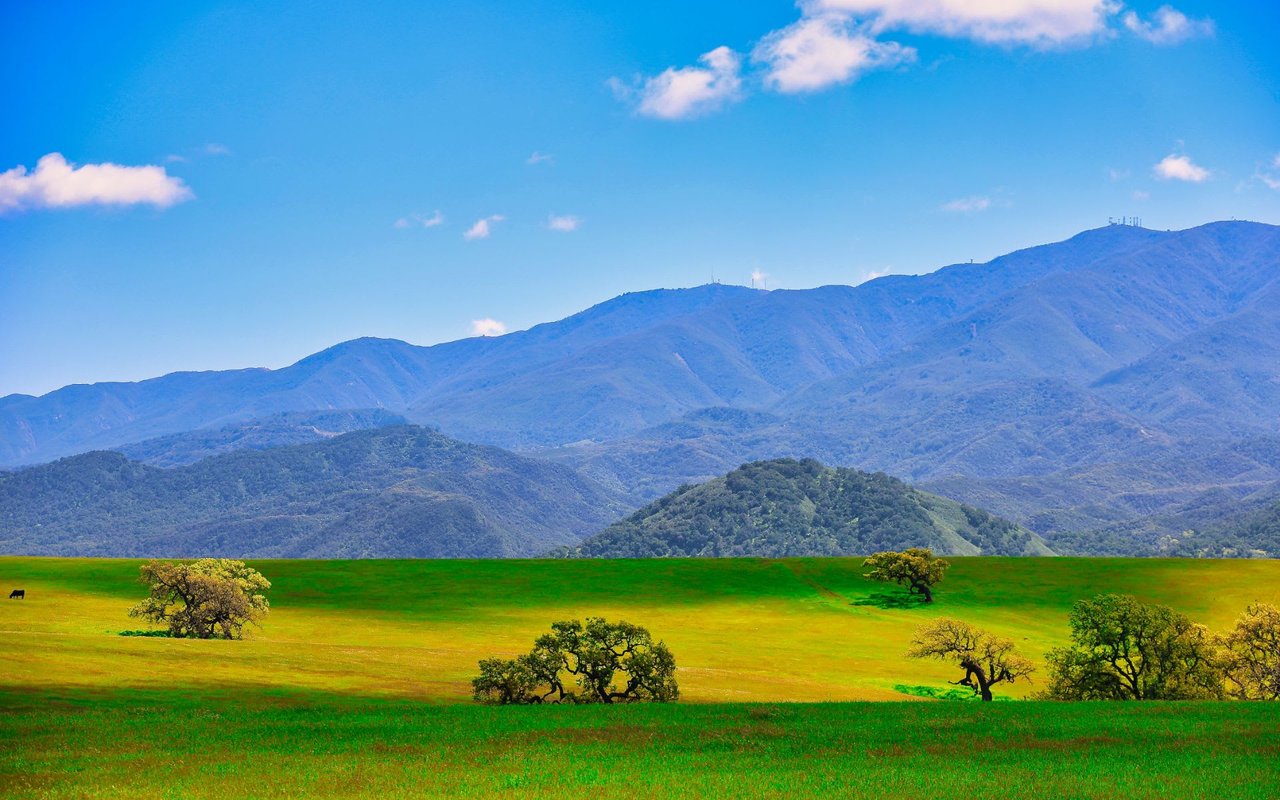
Santa Ynez Valley is where Santa Barbara County slows down. Over the mountains from the coast, the valley trades ocean views for oak-dotted hillsides, vineyards, horse pastures, and small towns that each have a distinct personality. People move here for space, privacy, and a pace of life that's hard to find anywhere else in Southern California, while staying within an hour of Santa Barbara and about two and a half hours of Los Angeles.
What surprises many buyers is how different the valley's communities are from one another. A Buellton townhome, a Los Olivos farmhouse, and a 40-acre Santa Ynez horse ranch are all "Santa Ynez Valley," yet they offer completely different lifestyles and price points. This guide walks through what each part of the valley offers so you can narrow down where you'd actually want to live.
Santa Ynez Valley sits on California's Central Coast in Santa Barbara County, about 35 miles northwest of Santa Barbara and roughly 125 miles northwest of Los Angeles. The Santa Ynez Mountains form its southern wall, separating it from Santa Barbara and the Pacific coast, while the San Rafael Mountains and Los Padres National Forest rise to the north. The Purisima and Solomon Hills mark the western edge toward Lompoc and Santa Maria, and the Santa Ynez River runs east to west across the valley floor.
Two highways connect the valley to the rest of the region: U.S. Highway 101, which runs through Buellton, and State Route 154, the scenic route over San Marcos Pass toward Santa Barbara and Goleta.
The valley is made up of five core communities, with Los Alamos sitting just to the north and often grouped in.
Solvang is the most recognizable, a Danish-heritage village with windmills, bakeries, and a walkable downtown. Living in Solvang means having shops, restaurants, and municipal services within a few blocks, along with the steady energy of a popular visitor destination.
Buellton sits right on Highway 101 and works as the valley's commercial hub. It's more laid-back than its neighbors, known for craft breweries, distilleries, and wine production, and it typically offers the most accessible entry point into the valley's housing market.
Los Olivos is a small, polished village built around tasting rooms, galleries, and upscale dining. Homes here lean toward historic properties, high-end farmhouses, and small vineyard or equestrian parcels.
Santa Ynez, the valley's unincorporated namesake town, has a Western character, with a historic main street, feed stores, and a strong equestrian culture. This is where you'll find the valley's largest ranches and estate properties.
Ballard is the smallest and quietest community, a residential hamlet of country lanes and mature oaks, home to a schoolhouse dating to 1883. It suits buyers who want seclusion while staying minutes from Los Olivos and Solvang.
Los Alamos, at the valley's northern edge, has a retro Western look, antique shops, and a food scene that punches far above the town's size.
Santa Ynez Valley is a high-value market with consistently limited inventory. Much of the land is protected under Agricultural Preserve (Williamson Act) contracts, and building guidelines are strict, so new supply comes slowly. That scarcity has helped values hold steady, and demand stays strong from Los Angeles and Santa Barbara buyers looking for space and a lifestyle change.
Pricing varies widely by town and property type. The ranges below reflect general patterns, not current listings, and individual properties can fall well outside them.
Community | Typical Price Range | Common Property Types |
|---|---|---|
Buellton | $800K – $1.5M | Single-family homes, condos, townhomes |
Solvang | $1.0M – $2.5M | In-town homes, historic cottages, small estates |
Ballard | $1.5M – $3.5M | Country homes, multi-acre parcels |
Los Olivos | $1.8M – $5.0M+ | High-end residences, vineyard estates, farmhouses |
Santa Ynez | $2.0M – $15.0M+ | Equestrian ranches, luxury compounds, large acreage |
A few dynamics are worth knowing before you shop. Median listing prices often look higher than typical home values because large ranch and estate listings pull the numbers up. Cash buyers, including many second-home purchasers, make up a meaningful share of transactions, which can make the market less sensitive to mortgage rate swings. And if you're considering a property as a vacation rental, Santa Barbara County tightly regulates short-term rentals in unincorporated areas like Santa Ynez, Los Olivos, and Ballard, so most legal vacation rentals operate within Solvang and Buellton.
Architecture in the valley ranges from Craftsman bungalows and Danish-inspired cottages to Spanish Colonial Revival homes, Mediterranean estates, and modern farmhouses. Most properties fall into one of three categories.
Village homes are found within Solvang, Buellton, and Los Olivos, usually on lots between a quarter acre and one acre. They come with municipal water and sewer, lower upkeep, and easy access to schools, shops, and restaurants, which makes them a fit for families, retirees, and anyone wanting a low-maintenance primary or second home.
Vineyard estates and agricultural parcels typically span 10 to 100+ acres, concentrated around Los Olivos, Santa Ynez, and the Sta. Rita Hills. Beyond the main residence, these properties may include planted vineyards, olive groves, guest houses, and sometimes winemaking or tasting facilities. Many participate in the Williamson Act, which can reduce property taxes in exchange for keeping the land in agricultural use. That's a meaningful benefit, but it also comes with restrictions you'll want to understand before buying.
Equestrian and ranch properties are covered in more detail below.
One practical point that's easy to overlook: outside town limits, water usually comes from private wells and storage tanks rather than municipal service. Well capacity and water rights should be part of any due diligence on rural property here.
The valley's horse culture is known well beyond California, supporting thoroughbred breeding, reining, dressage, and everyday trail riding. Equestrian properties are concentrated in Santa Ynez, Happy Canyon, and Ballard, generally ranging from 5 to more than 200 acres.
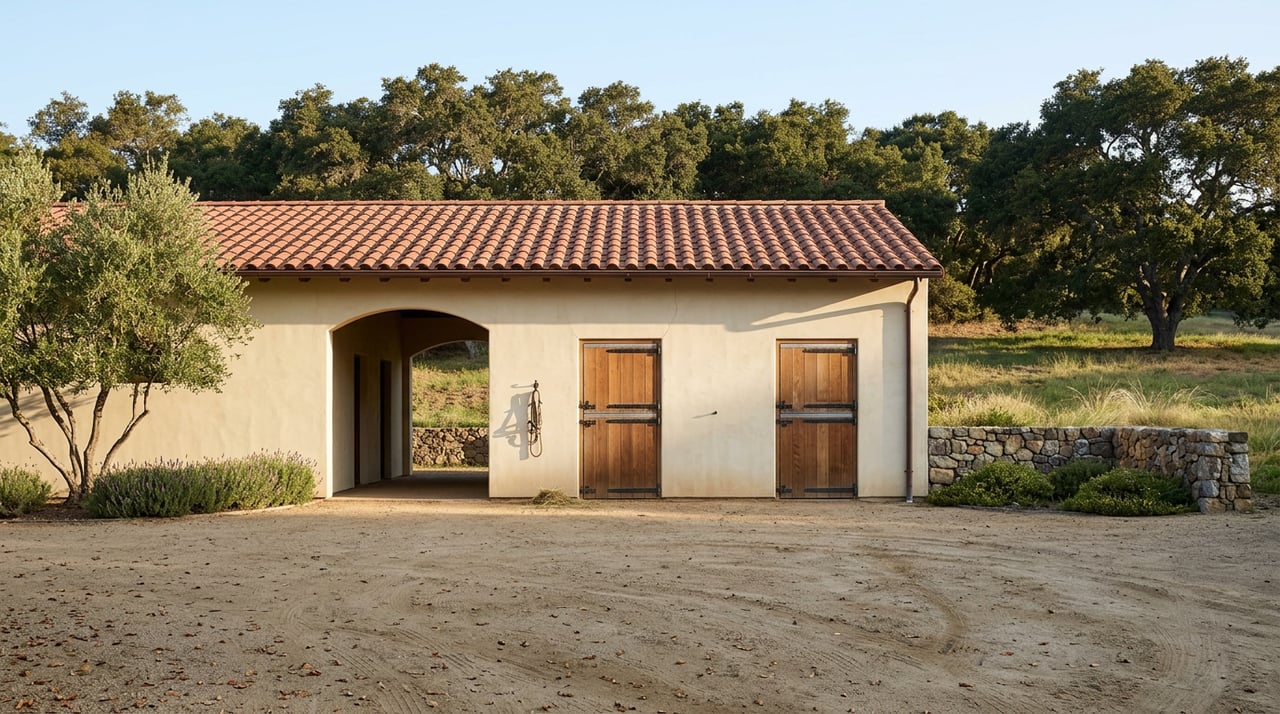
A well-set-up horse property here often includes a multi-stall barn, covered or open arenas, pipe-fenced turnout pastures, tack rooms, and separate quarters for a ranch manager or groom. Private wells and water storage are standard, and some properties offer access to nearby trail networks toward Los Padres National Forest.
These properties require real ongoing investment in facility upkeep and animal care, so buyers should weigh the condition of existing infrastructure as carefully as the home itself. Barn age, arena footing, fencing, and water supply can significantly affect what a property will cost you after closing.
The valley's wine scene is defined by its microclimates. Cooler ocean air flows in from the west, while the eastern end stays noticeably warmer, so a short drive takes you through very different growing conditions and wine styles.
On the western edge near Buellton and Lompoc, the Sta. Rita Hills benefits from marine fog and breezes, producing much of the area's Pinot Noir and Chardonnay. Sanford Winery and Babcock Winery & Vineyards are two well-known names here. In the central valley and the Los Olivos District, warm days and cool nights favor Rhône varietals like Syrah and Grenache, with estates including Beckmen Vineyards, Sunstone Winery, Andrew Murray Vineyards, and Roblar Winery. Out east, Happy Canyon's inland heat supports Cabernet Sauvignon, Cabernet Franc, and Sauvignon Blanc at producers like Grassini Family Vineyards and Crown Point Vineyards.
For residents, the walkable tasting room clusters are part of everyday life. Downtown Los Olivos has more than 30 tasting rooms within a few blocks, Solvang has dozens woven into its village streets, and Buellton's Industrial Way mixes wineries with distilleries and breweries.
Solvang, meaning "sunny field" in Danish, was founded in 1911 by Danish-American educators who came west to escape Midwestern winters. More than a century later, the town still reflects that heritage in its half-timbered buildings, copper steeples, windmills, and the stork figures perched on rooftops, a Danish symbol of good luck.
Culture runs deeper than the architecture. The Elverhøj Museum of History & Art tells the story of the town's Danish-American roots from inside a hand-built 1920s home, and the Hans Christian Andersen Museum sits above The Book Loft. A replica of Copenhagen's Little Mermaid statue adds to the European feel.
Food is a big part of Solvang's identity. Bakeries like Olsen's Danish Village Bakery, Birkholm's, and Mortensen's turn out kringles, butter cookies, and Danish pastries, while æbleskiver, the round Danish pancake puffs served with powdered sugar and jam, are a local staple. For something savory, Bit O' Denmark and Copenhagen Sausage Garden serve open-faced sandwiches and Scandinavian sausages.
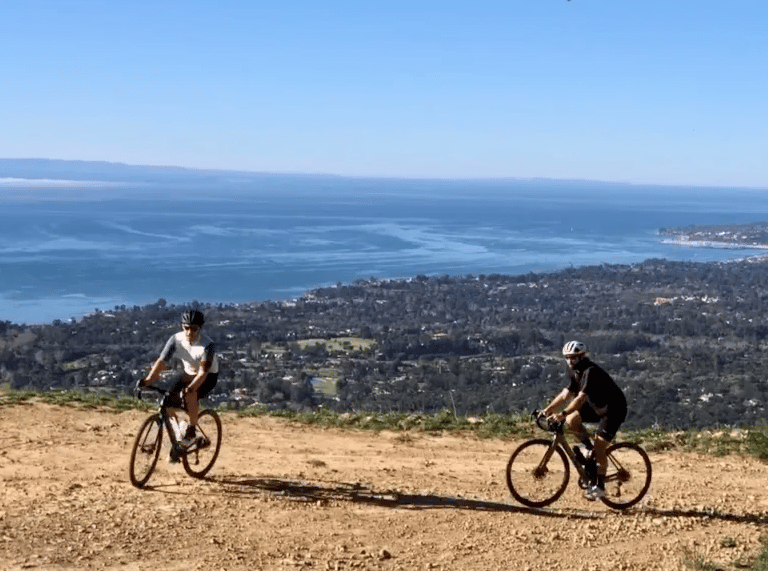
Beyond wine and Solvang, the valley has a surprising range of things to do. In Buellton, OstrichLand USA lets visitors feed more than 100 ostriches and emus up close, and the Santa Ynez Valley Botanic Garden at River Park highlights native California plants. Cyclists use the Dan Henry Bike Route, which links Solvang and Los Olivos along quiet country roads, and Happy Canyon Road and Ballard Canyon are favorite scenic routes for both driving and riding.
Guided horseback rides through private ranches and vineyards are popular in Los Olivos and Santa Ynez, and Solvang's horse-drawn trolley, the Hønen, offers an easy way to see the village. For locals, community life tends to revolve around farmers' markets, high school football, vineyard events, and charity fundraisers, which is a big reason the valley feels so tight-knit.
Lake Cachuma, a 3,100-acre county park and reservoir along Highway 154, is the valley's main outdoor destination. Because it supplies drinking water, swimming and other body-contact water sports aren't allowed, but the lake has a full-service marina with boat and kayak rentals, year-round fishing for bass, trout, and catfish, and camping options from tent sites to yurts and cabins. Winter eagle-watching cruises and an 18-hole disc golf course with lake views add to the appeal.
Hiking ranges from easy to demanding. Nojoqui Falls County Park offers a short, shaded walk through oaks to a seasonal waterfall, which makes it a good family outing. The Sweetwater Trail follows Lake Cachuma's shoreline and is good for birdwatching. Gaviota Peak, near the Highway 101 and Highway 1 junction, climbs about 2,400 feet to views stretching from the valley to the ocean. In spring, Figueroa Mountain and Grass Mountain draw crowds for poppy and lupine blooms, with Grass Mountain known as one of the steepest climbs in the area.
The valley's dining scene draws directly from the farms and vineyards around it. In Los Olivos, Bar Le Côte focuses on seafood like Santa Barbara spot prawns and Pacific oysters and comes from the team behind Bell's in Los Alamos. The Tavern at Mattei's Tavern serves open-flame Central Coast cooking inside an 1886 stagecoach stop, and Los Olivos Café & Wine Merchant was one of the area's early farm-to-table pioneers.
Solvang's peasants FEAST is known for seasonal, produce-driven comfort food, and SY Kitchen in Santa Ynez serves rustic Italian dishes, handmade pasta, and wood-fired pizza. Buellton covers two very different experiences: the Hitching Post II, a classic Santa Maria-style oak-grilled steakhouse with its own Pinot Noir, and Vega Vineyard & Farm, where lunch is served on a working farm.
Public education in the valley is split among several small elementary districts that feed into one high school, which often means small class sizes and a strong community feel.
District | Schools |
|---|---|
Solvang School District | Solvang Elementary School (K–8) |
Buellton Union School District | Oak Valley Elementary (K–5), Jonata Middle School (6–8) |
Los Olivos Elementary School District | Los Olivos Elementary School (K–8) |
Ballard School District | Ballard Elementary School (K–6), founded 1883 |
College School District | Santa Ynez Elementary School (K–8) |
Santa Ynez Valley Union High School District | Santa Ynez Valley Union High School (9–12), Refugio High School (continuation) |
Santa Ynez Valley Union High School serves students from across the valley, including Los Alamos, and offers AP, career technical education, FFA, and athletics programs.
Private options are notable for a valley this size. Dunn School in Los Olivos is a college-prep day and boarding school for grades 6–12 on a 55-acre campus. Midland School, also in Los Olivos, is a grades 9–12 boarding school on a 2,860-acre working ranch with a focus on environmental stewardship and hands-on ranch work. Santa Ynez Valley Christian Academy serves preschool through 8th grade.
School boundaries can follow district lines rather than town names, so if schools are a priority, confirm which district a specific property falls in before making an offer.
The valley has a Mediterranean climate with wide swings between daytime and nighttime temperatures. Summer afternoons regularly reach the upper 80s to low 90s, noticeably warmer than coastal Santa Barbara, before cooling sharply after sunset. Winters are mild during the day, with chilly nights, occasional frost, and most of the year's rainfall. Spring brings wildflowers and vineyard bud break, and fall is harvest season.
Microclimates matter when choosing a home. The western valley around Buellton and the Sta. Rita Hills stays cooler thanks to ocean air moving up the Santa Ynez River corridor, while Santa Ynez and Happy Canyon run hotter in summer. If you're sensitive to heat, or planning a vineyard or garden, that difference is worth factoring in.
Day-to-day life here is relaxed and rooted in the land. Boots and denim are more common than city clothes, and residents spend much of their time outdoors, whether riding, cycling, gardening, or dining on a patio.
A car is essential in the valley, and for anyone working in Santa Barbara or Goleta, the commute is a key part of the decision.
Highway 154 over San Marcos Pass is the shorter route, taking about 35 to 45 minutes from Solvang or Santa Ynez to Santa Barbara or Goleta. It's a beautiful drive with views of Lake Cachuma, but it's a winding two-lane mountain road with few passing lanes. Slow trucks can cause delays, and winter storms or wildfires occasionally lead to closures.
U.S. Highway 101 loops west through Buellton and down the Gaviota Coast, taking around 45 to 55 minutes to Santa Barbara. It adds 10 to 15 miles but is a divided freeway and easier to drive, though it can occasionally see wind-related closures near Gaviota.
Other common drives include Lompoc and Vandenberg Space Force Base via Highway 246 (25 to 35 minutes), Santa Maria via Highway 101 (30 to 35 minutes), and Los Angeles via Highway 101 (about 2 to 2.5 hours outside peak traffic). The nearest commercial airports are Santa Barbara (SBA) and Santa Maria (SMX).
Choosing between a Solvang cottage, a Los Olivos vineyard estate, or a Santa Ynez horse ranch involves questions that go well beyond the listing photos, from well capacity and Williamson Act contracts to school districts and short-term rental rules. At Alemann & Associates, we help buyers and sellers across Santa Barbara County work through those details with clear guidance and steady communication. Broker and founder Terence Alemann brings experience as both a real estate advisor and an investor, and our team of Tiffany Charbonneau, Easton Konn, and David Marchetti is ready to help you find the right fit in the valley. Call Terence at (805) 637-3378 or email [email protected] to start the conversation.
There's plenty to do around Santa Ynez Valley, including shopping, dining, nightlife, parks, and more. Data provided by Walk Score and Yelp.
Explore popular things to do in the area, including Crown Point Vineyards, Figueroa Farms, and Two Wolves Wine.
| Name | Category | Distance | Reviews |
Ratings by
Yelp
|
|---|---|---|---|---|
| Dining | 1.52 miles | 13 reviews | 5/5 stars | |
| Dining | 1.52 miles | 0 reviews | 0/5 stars | |
| Dining | 2.21 miles | 0 reviews | 0/5 stars | |
| Dining | 2.48 miles | 5 reviews | 3.8/5 stars | |
| Dining | 2.64 miles | 3 reviews | 3/5 stars | |
| Dining | 2.85 miles | 2 reviews | 4.5/5 stars | |
| Dining | 3.18 miles | 0 reviews | 0/5 stars | |
| Dining · $ | 3.28 miles | 54 reviews | 4.7/5 stars | |
| Dining | 3.39 miles | 61 reviews | 4.9/5 stars | |
| Dining | 3.44 miles | 1 review | 5/5 stars | |
| Dining · $$ | 3.49 miles | 567 reviews | 4.1/5 stars | |
| Dining | 3.51 miles | 0 reviews | 0/5 stars | |
| Dining | 3.61 miles | 0 reviews | 0/5 stars | |
| Dining | 3.63 miles | 0 reviews | 0/5 stars | |
| Dining · $$ | 3.68 miles | 881 reviews | 4.2/5 stars | |
| Dining · $$ | 3.68 miles | 100 reviews | 3.9/5 stars | |
| Dining · $$ | 3.7 miles | 244 reviews | 4/5 stars | |
| Active | 2.88 miles | 1 review | 5/5 stars | |
| Active | 3.09 miles | 4 reviews | 5/5 stars | |
| Active | 3.11 miles | 2 reviews | 3/5 stars | |
| Active | 3.44 miles | 1 review | 5/5 stars | |
| Beauty | 1.94 miles | 3 reviews | 5/5 stars | |
| Beauty | 2.64 miles | 0 reviews | 0/5 stars | |
| Beauty | 3.7 miles | 3 reviews | 5/5 stars | |
|
|
||||
|
|
||||
|
|
||||
|
|
||||
|
|
||||
|
|
Santa Ynez Valley has 9,022 households, with an average household size of 2. Data provided by the U.S. Census Bureau. Here’s what the people living in Santa Ynez Valley do for work — and how long it takes them to get there. Data provided by the U.S. Census Bureau. 22,538 people call Santa Ynez Valley home. The population density is 1,014 and the largest age group is Data provided by the U.S. Census Bureau.
Total Population
Population Density Population Density This is the number of people per square mile in a neighborhood.
Median Age
Men vs Women
Population by Age Group
0-9 Years
10-17 Years
18-24 Years
25-64 Years
65-74 Years
75+ Years
Education Level
Total Households
Average Household Size
Average individual Income
Households with Children
With Children:
Without Children:
Marital Status
Blue vs White Collar Workers
Blue Collar:
White Collar: