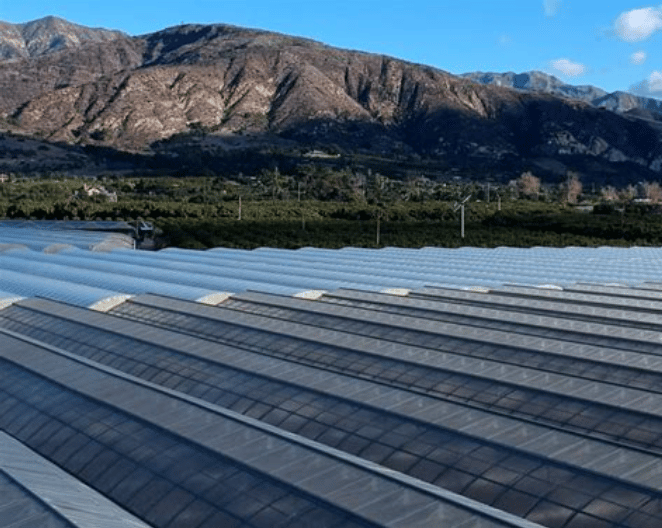
Coastal View reported that in 2018, a Carpinteria couple listed their home on Foothill Road for $1,049,000. It sat. They relisted a year later at $1,060,000. It sat again. The house backed up to an active cannabis greenhouse, and according to a nuisance lawsuit the couple later filed in Santa Barbara Superior Court, buyers who toured the property kept saying the same thing on their way out the door: they could smell it.
Carpinteria Valley residents have filed close to 3,900 odor complaints with the county since 2018. Growers leaned on misting systems that masked the smell instead of removing it. The county issued warnings. In 2025, the county set a March 18, 2026 deadline for greenhouse operators to install carbon filtration or risk losing their business licenses; in April 2026, Noozhawk reported that the county issued notices of intent to revoke the licenses of nine operators who missed the deadline. That sequence matters if you're comparing homes in Carpinteria right now rather than just scrolling a median price online.
The March 2026 Deadline and License Notices
On March 10, 2026, the Santa Barbara County Board of Supervisors voted 4 to 1 to deny every extension request from the eight growers still asking for more time. The rule itself wasn't new. A year earlier, the board had ordered all cannabis greenhouse operators in the valley to install multi-technology carbon filtration, commonly called scrubbers, by March 18, 2026, or risk losing their business licenses. What was new was the board actually holding the line. As KSBY reported ahead of the deadline, only 11 of the valley's 22 growers had met the requirement with days left on the clock.
The county followed through. By late May, two of the nine operators named in the county notices had come into compliance and one was found not to hold an operating license at all. The remaining six filed appeals, which under county process let them keep operating for up to 60 more days while the appeal is heard, as both Coastal View and KEYT confirmed in their spring coverage. That 60-day clock would have run out by early summer, which means any buyer looking at this corridor now should ask an agent to confirm the current license status of the nearest facility directly with the county rather than relying on where things stood in May.
First District Supervisor Roy Lee, who represents Carpinteria, was blunt about why the board wouldn't budge.
"The neighbors don't get extensions."
— Roy Lee, as quoted by the Santa Barbara Independent
What a Median Price Actually Hides Here
Search "Carpinteria homes for sale" and you'll get one blended number back. That number is doing more concealing than revealing this year. In the three months ending in July 2026, Carpinteria's median sale price ran around $1.1 million, up roughly 29 percent from a year earlier. In Downtown-Old Town Carpinteria specifically, the March 2026 median sale price was $1.7 million, up 95.7 percent from a year earlier. Meanwhile the broader valley's average house price was $993,000 in July 2026.
That's a gap of $700,000 or more between the coastal downtown core and the wider valley, and it isn't fully explained by square footage or distance to the beach. It tracks, almost block for block, the edge of the greenhouse corridor. A buyer typing "Carpinteria" into a search bar is looking at listings that could be a remodeled bungalow four blocks from Carpinteria City Beach or a fixer sharing a property line with an active grow operation on Foothill Road. The address says Carpinteria both times. The buying experience, and the eventual resale conversation, is not the same.
What the Ruling Means for Odor Claims
Complaints alone rarely move a market. Legal precedent does. The Santa Barbara Independent reported that in March 2025, Santa Barbara Superior Court Judge Thomas Anderle certified a class action against Valley Crest Farms, ruling that neighbors within a one-mile radius of the operation could collectively pursue damages over nuisance odor. Plaintiffs' attorney Robert Curtis was direct about what that opened up.
"It opens the door for adjacent homeowners to come in collectively and sue that individual for damages."
This isn't theoretical. Ever-Bloom's owner settled a similar suit in 2022, spending close to $2 million to install scrubbers and paying $235,000 in damages to the plaintiffs. The owners of Ceres Farm settled a 2023 suit by agreeing to install scrubbers and paying an undisclosed sum before the case went further. Those are documented outcomes, not projections. For a buyer weighing a property in this corridor, the odor issue is no longer a one-time nuisance that a good set of windows solves. It's a live legal exposure with a settlement history attached to it, and that's the kind of fact worth surfacing before an offer goes in, not after escrow closes.
The Corridor Worth Asking About Specifically
The odor complaints and court filings aren't spread evenly across Carpinteria. They cluster on a short list of streets that keep showing up in county records and lawsuits going back to 2016: Foothill Road, particularly the stretch running roughly from the 3500 to the 4700 blocks, Casitas Pass Road, and the foothill neighborhoods above them along La Mirada Drive and Paquita Drive.
Compliance on that corridor is also uneven in ways that don't show up on a listing sheet. The Dutch-made Envinity scrubbers most operators have adopted remove about 84 percent of cannabis odor on average. Some growers have instead installed cheaper air purifiers imported from Texas that state regulators found remove only about 41 percent, and which California has recommended against on safety grounds. Neighbors of one operation that switched to the alternative technology were still filing fresh complaints as recently as June 2026. Being near a facility that technically meets the letter of the ordinance doesn't guarantee the smell problem is actually solved.
For Investors, the Land Cuts Both Ways
Not every buyer in this corridor is looking for a primary residence. Some of the valley's agricultural parcels are being marketed explicitly around their cannabis income potential, greenhouses that once grew flowers now leased out or operated for cultivation revenue. That can be a legitimate return on a large parcel. It also means the same acreage generating that income sits inside the exact radius where the Anderle ruling now allows neighbors to organize a collective damages claim. An investor evaluating one of these properties is underwriting both sides of this story at once, the cash flow and the litigation exposure, and both belong in the same due diligence conversation.
What This Means Before You Write an Offer
If you're comparing a home in the greenhouse corridor against one in Padaro Lane, downtown, or the Carpinteria Bluffs area, a few questions are worth asking directly rather than assuming a portal's neighborhood boundary tells you anything useful. Has the nearest active operation passed a post-deadline inspection, or is it still inside an appeal window. Is there a documented history of complaints tied to that specific address, not just the general area. And is the seller aware of any pending notice of violation on a neighboring parcel? A documented odor dispute next door is the kind of thing a careful buyer's agent should be confirming directly with the county rather than taking on faith.
None of this means the Carpinteria Valley is off the table. It means the diligence looks different a quarter mile inland than it does two blocks from the sand, and in 2026 that difference is measurable in county enforcement records, not just anecdote.
A Few Common Questions
Is the odor issue resolved now that the March 2026 deadline has passed? Not entirely. As of late May 2026, six of the nine operators originally cited for missing the deadline were still in the appeal process, and complaints have continued even at operations using approved but less effective technology. The corridor is meaningfully cleaner than it was, but it isn't settled.
If you're weighing a purchase or a sale anywhere in the Carpinteria Valley, from the coastal core to the foothill corridor, Alemann & Associates can walk you through what a specific block's enforcement and complaint history actually looks like before you write an offer. Reach out through our buyers guide or contact us directly to talk through what your money buys on a given street, not just in a given zip code.
Picture Credit: farmlane.com
This article is general information, not legal, tax or financial advice. Consult a qualified professional about your situation.