If you search for the best home improvements for resale value, you will find the same list everywhere: replace the garage door, refresh the paint in a neutral tone, reface the kitchen cabinets, add a mid-range deck. That advice is not wrong. It is simply written for a different house in a different market — one that sells near the national median existing-home price of $431,400.
Montecito's median sale price runs between $5.7 million and $7.3 million, with the average pulled higher still, into the $7 million to $7.5 million range, by ultra-luxury transactions closing above $10 million and $20 million. That places the typical Montecito home somewhere between thirteen and seventeen times the national median. A buyer at that level is not weighing a $4,000 garage door. They are weighing whether they can insure the property, whether the pedigree of the architecture survived the last renovation, and whether they can move in this year or wait three years for Santa Barbara County to approve a permit.
The improvements that matter here are different, and so are the ones that quietly cost you money. What follows is how capital allocation actually works in this market, based on what buyers in Montecito reward and what they walk away from.
The Thesis: Buyers Pay for Condition, Not for Taste
The single most important number in Montecito pre-sale strategy is the spread between turnkey and dated pricing.
Move-in ready homes here — designer finishes, modern floor plans, upgraded structural and fire hardening, integrated home technology, nothing left to do — transact in the range of $2,200 to $2,800 or more per square foot. Dated properties with sound structure but deferred maintenance and unaddressed systems sit in the $1,300 to $1,600 per square foot range.
That is a gap of $900 to $1,200 per square foot, or roughly 25 to 40 percent. On a standard 4,000 to 5,000 square foot Montecito residence, the turnkey premium translates to between $2.5 million and $4 million.
That premium is not a reward for good taste. It is compensation for time. Because Santa Barbara County entitlement and permitting for major estate work runs 14 to 42 months end to end, a buyer purchasing a dated property is not just buying a renovation budget. They are buying one to three years of holding costs on a house they cannot live in, plus the uncertainty of an approval process with a public hearing component. High-net-worth buyers price that risk aggressively, and they will pay a great deal to avoid it.
Understanding this reframes the entire question. You are not asking which renovation returns the most per dollar spent. You are asking which improvements move your property from one pricing tier into the next without triggering the permitting process that created the gap in the first place.
Turnkey properties reflect this in their velocity as well: they tend to sell in roughly 45 days, while highly custom or unrenovated estates average closer to 80 to 90 days. The Montecito list-to-sale ratio sits around 96 percent overall — buyers negotiate three to four percent off list on average — but the small share of genuinely pristine properties still closes at or above asking.
Three Transactions That Illustrate the Spread
In the Hot Springs corridor, a dated residence of roughly 3,800 square feet on just over an acre traded in the low-to-mid $3 million range, working out to somewhere between $800 and $900 per square foot. Following a full interior and exterior modernization, pool and outdoor livability work, and landscape infrastructure upgrades, the property resold in the $7 million to $8 million range — pushing valuation well past $1,900 per square foot.
On the Santa Barbara coastal flank, a 2,800 square foot home on roughly eight-tenths of an acre was acquired un-updated at approximately $1,100 per square foot. A cosmetic overhaul — flooring, kitchen, primary suite, and fire-hardening landscape work — brought it near the $2,000 per square foot mark on delivery.
A third property, a 5,300 square foot estate on more than an acre and a half, took a deliberately different route. Rather than pursue a footprint expansion and the municipal review that comes with it, the work focused entirely on high-yield interior finishes: wide-plank oak, stone, and integrated Lutron and Savant systems. It achieved pricing above $2,200 per square foot with materially fewer days on market than unrenovated comparables.
The common thread in all three is not the size of the budget. It is that the work avoided or minimized discretionary review.
Why the Cost vs. Value Report Misleads Here
The industry-standard Cost vs. Value Report published by Zonda paints a discouraging picture for the Pacific region. An upscale major kitchen remodel recoups roughly 38 to 53 percent of cost. An upscale primary suite addition recoups 24 to 46 percent. An upscale bathroom remodel lands between 33 and 54 percent.
Those figures are accurate for what they measure. They are also close to useless in Montecito, for three reasons.
First, the Pacific region dataset blends mid-tier suburban markets, where buyers are genuinely cost-sensitive and price renovations against their own contractor quotes, with ultra-luxury enclaves where buyers are time-sensitive and price renovations against the alternative of waiting.
Second, the report assumes a permitting environment that does not exist here. In most of the country, a permit takes weeks. In Montecito, the combination of pre-application review, environmental clearance, Montecito Board of Architectural Review hearings, and county plan check can consume years. The value of avoiding that process does not appear anywhere in a national recoup percentage.
Third, and most importantly, the report models linear value addition — spend a dollar, recover a fraction of a dollar. Montecito pricing is not linear. It is tiered. A $500,000 investment in a suburban home might add $250,000. The same $500,000 in Montecito, applied correctly, can move a property out of the $1,400 per square foot fixer band and into the $2,400 per square foot turnkey band, which on a 4,000 square foot home is a several-million-dollar reclassification.
Insurability Is the New ROI
Before discussing kitchens or landscaping, address the improvement category that determines whether your transaction closes at all.
The California FAIR Plan currently caps residential dwelling coverage at $3 million per property. Set that against a median Montecito sale price of $5.7 million to $7.3 million, and rebuild costs that routinely run $1,000 to $1,800 or more per square foot, and the arithmetic is stark: the state's insurer of last resort cannot come close to covering a typical Montecito estate. Owners here have to stack Difference in Conditions or excess coverage policies on top of a FAIR Plan policy, or secure private excess lines entirely.
Securing those private lines is where hardening becomes financially decisive.
Who Is Actually Writing Policies
Admitted carriers have largely withdrawn. Most major names, including Allstate and State Farm, maintain broad moratoria across high-risk foothill areas. The market that remains is excess and surplus lines and high-net-worth specialists — Chubb, PURE, AIG Private Client, Vault — and those carriers will write in Montecito, but almost exclusively for properties that pass rigorous home-hardening inspection and fire-mitigation audit.
Annual premiums for a $5 million-plus Montecito home currently run from $35,000 to more than $80,000, depending on parcel location, brush proximity, roof construction, and whether non-admitted surplus line fees apply.
The fire hazard designation itself splits the community. The foothills, canyons, and wildland-urban interface carry a Very High Fire Hazard Severity Zone designation. The lower flatlands and coastal bands fall into moderate-to-high severity zones. Where your parcel sits materially changes what underwriters will require.
What Underwriters Require
Under California's Safer from Wildfires framework and the independent standards high-net-worth carriers apply, three categories of work come up repeatedly.
Class A roofing means non-combustible covering — slate, tile, metal, or Class A fire-rated architectural asphalt. For the Spanish clay tile roofs common throughout the Golden Quadrangle, carriers now require that all tile ends be sealed, or bird-stopped, with mortar or metal to block ember intrusion. Locally, a Class A roof upgrade runs $40,000 to $120,000 and can exceed $200,000 on complex high-end slate or custom tile estate roofs.
Ember-resistant vents replace standard foundation, gable, and attic venting with corrosion-resistant one-eighth or one-sixteenth inch metal mesh, or with specialty ember-activated baffle products such as Vulcan or Brandguard vents that seal automatically under heat. This is the cheapest meaningful hardening measure available: $3,000 to $10,000 depending on footprint and roofline height.
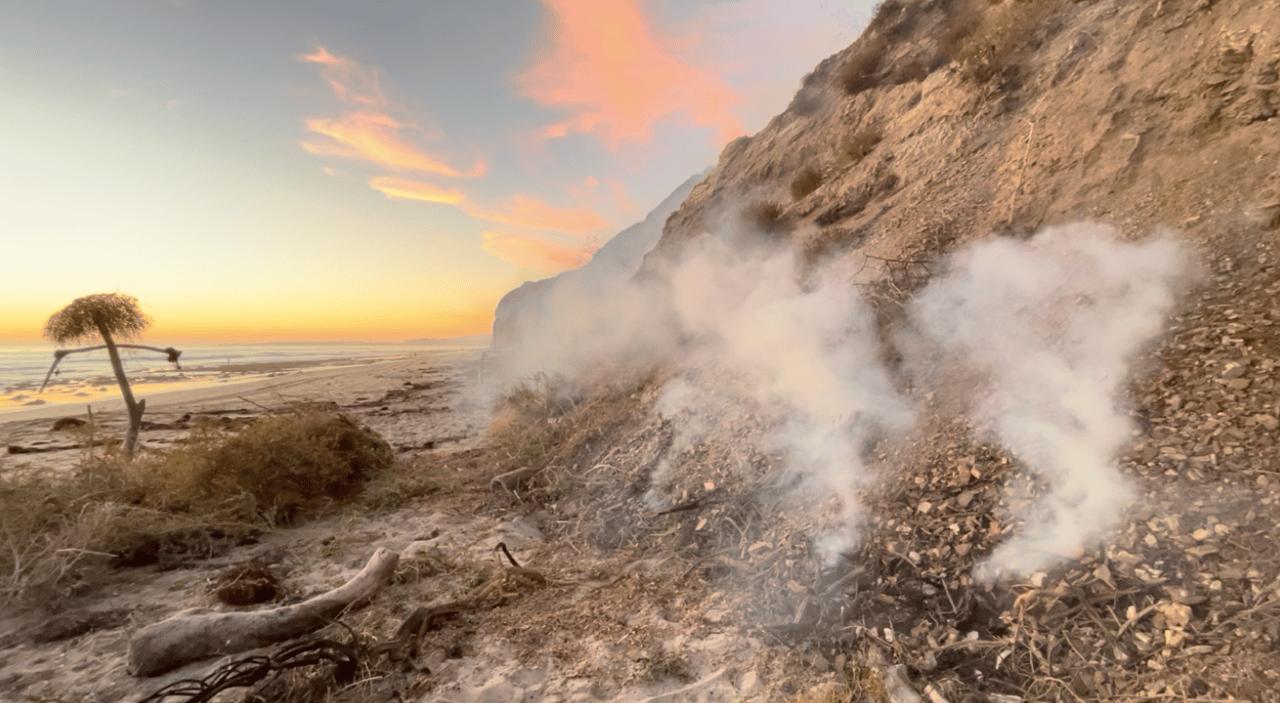
Defensible space is graded in three zones. Zone 0, the first five feet around structures and decks, requires absolute removal of combustible material — wood mulch, attached wooden gates, privacy hedging against walls, dry plantings. Zone 1, from five to thirty feet, calls for elimination of dense underbrush, canopy spacing, removal of dead branches, and fire-resistive planting. Zone 2, thirty to one hundred feet and beyond, means fuel reduction: grass trimming, brush clearing, limbing trees up six to ten feet, and opening gaps in dense scrub. Initial clearing and retrofit on an estate parcel runs $10,000 to $35,000 or more, with ongoing fuel management and abatement costing $5,000 to $15,000 annually.
None of this photographs well. None of it appears in a listing description as a selling feature. All of it determines whether a buyer's insurance broker can bind coverage during escrow, and a deal that stalls over an uninsurable roof in week three of a thirty-day escrow rarely recovers at the original price.
Permits: The Timeline That Decides Everything Else
The reason Montecito's turnkey premium is so large is that the alternative is so slow. Understanding the actual process is the difference between a smart pre-sale plan and an expensive mistake.
The Montecito Board of Architectural Review
MBAR meets every three weeks, on Thursdays at 2:00 PM. A full cycle from submittal to final approval takes three to nine months and typically requires two to four passes through conceptual, preliminary, and final hearings. That is the review timeline alone, before county plan check begins.
When the Planning Commission Gets Involved
Certain projects escalate from administrative clearance to formal Montecito Planning Commission public review. The common triggers are large structures or massing — residences exceeding 20,000 square feet, or multi-building developments adding substantial footprint; variance requests for height limits, setbacks, or floor-area-ratio exceedances; development in environmentally sensitive areas including stream setbacks along San Ysidro or Cold Springs Creek, slopes over twenty percent, or prominent ridgelines; land use changes such as lot line adjustments or subdivisions; and neighbor appeals of an administrative or MBAR decision.
That last trigger deserves emphasis. In a community where parcels are large and neighbors are attentive, an appeal is a real possibility, and it can add months to a timeline you thought was settled.
County Permit Reality
End to end, major luxury estate projects in Santa Barbara County run 14 to 42 months. The technical plan check itself is comparatively fast at eight to twelve weeks once submitted; it is the pre-application work, environmental review, and MBAR clearance ahead of it that consumes the calendar.
There is, however, a fast lane, and it defines the entire pre-sale playbook. Over-the-counter and express permits, issued same-day or within five days, cover in-kind roof replacement using the same weight and materials, minor mechanical, electrical, and plumbing equipment replacement, and interior non-structural cosmetic work including cabinetry, countertop replacement, and low-voltage wiring.
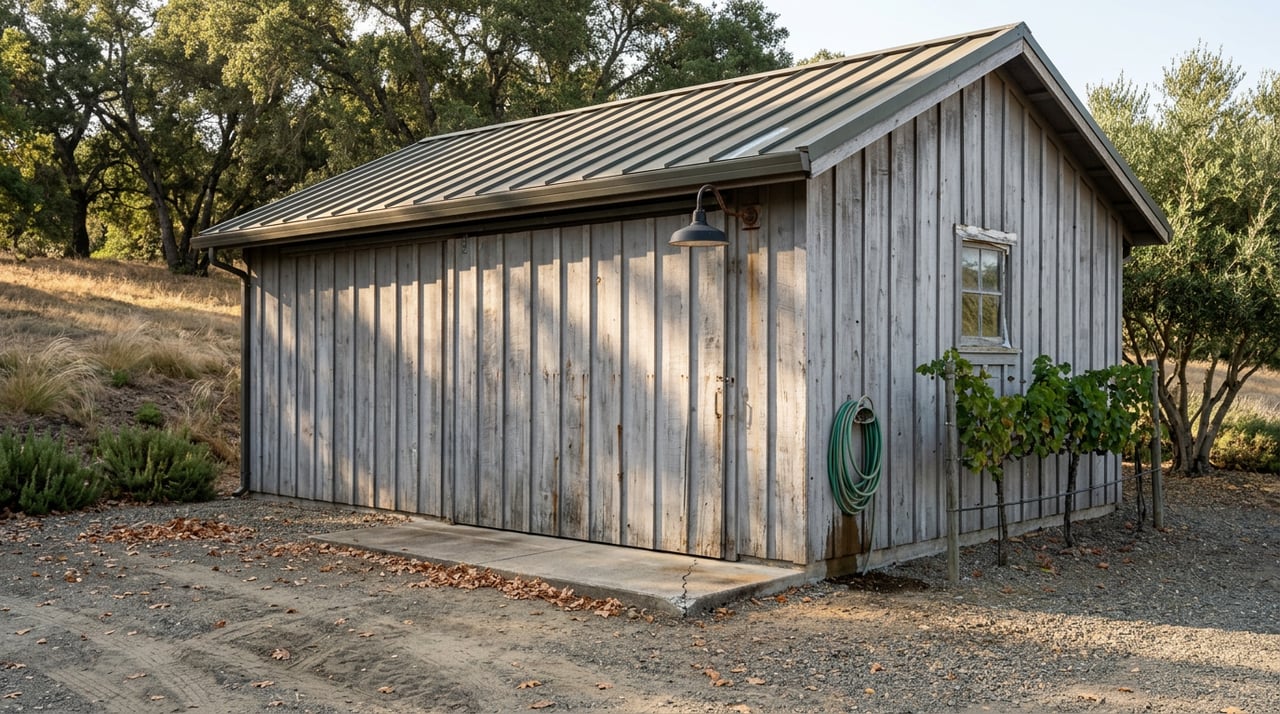
Certain work is exempt entirely: fences and walls under six feet, detached storage structures under 120 square feet without plumbing or electrical, retaining walls under four feet, and flat ground-level decks under 200 square feet.
The Coastal Overlay
Parcels south of Highway 101 fall under the California Coastal Act and Local Coastal Program jurisdiction. Most exterior modifications, additions, and new construction there require a Coastal Development Permit, adding six to twelve months to entitlement. Properties seaward of the first public road, or within 300 feet of coastal bluffs and beaches, sit in the appealable area and are subject to direct appeal to the California Coastal Commission. Expect heightened scrutiny of public view corridors, sea-level rise mapping, bluff-top setbacks, and site drainage.
If your property is in lower Montecito and your renovation touches the exterior, assume the timeline doubles.
Architectural Authenticity Beats Modernization
Montecito's architectural character is not decoration. It is a measurable component of value, and it is possible to renovate a property directly into a lower price band.
Style by Sub-Area
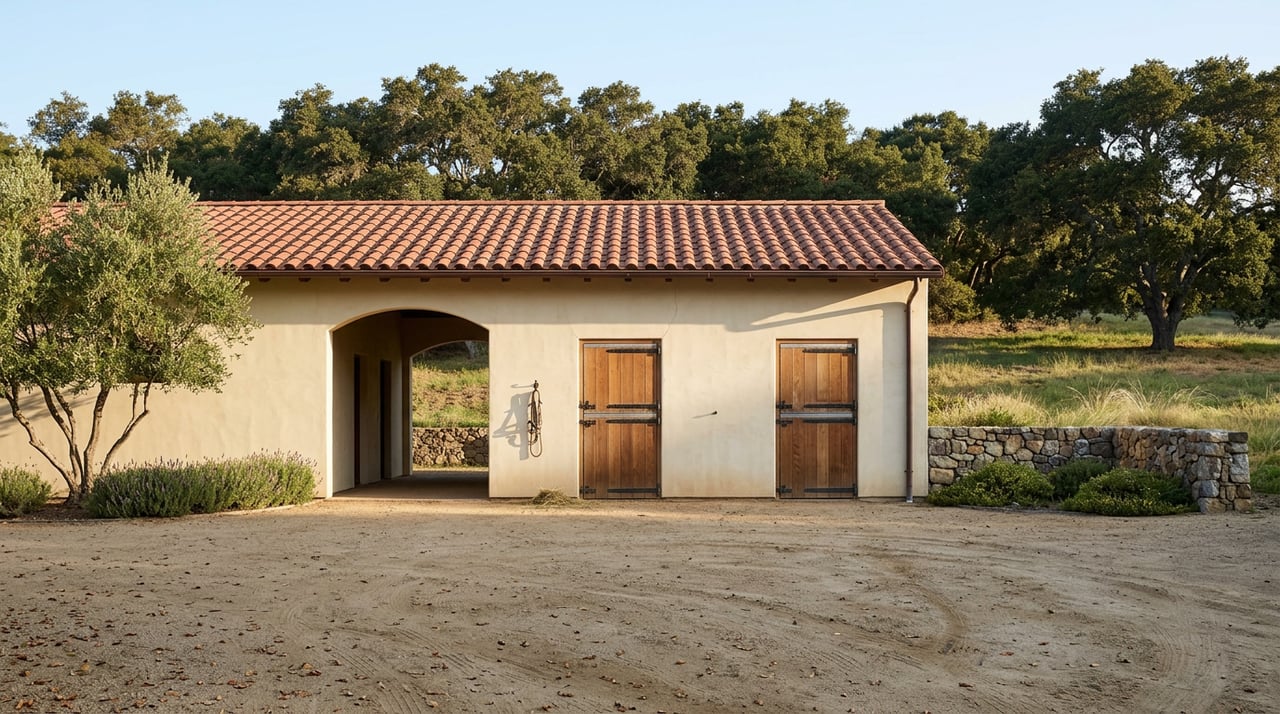
The Golden Quadrangle, north of East Valley Road in the Upper Village, is dominated by Spanish Colonial Revival, Andalusian villa, and classic Mediterranean architecture — heavy stone walls, thick plaster, low-pitched red tile roofs, and sprawling compound footprints.
Hedgerow and Birnam Wood run toward English Tudor, French Normandy, and cottage and farmhouse forms, with high-pitched slate or shingle roofs, leaded glass, and hedged privacy perimeters.
Fernald Point, Butterfly Beach, and the Lower Village are contemporary coastal, mid-century modern, and Cape Cod shingle style — glass walls, open indoor-outdoor transitions, and materials chosen to survive salt air.
Torito and the Middle Road foothills hold California ranch, Craftsman, and equestrian estate properties on wide sloping parcels featuring native oaks, stone masonry, and timber.
Renovating against the grain of your sub-area is one of the more reliable ways to lose money here.
The Pedigree Premium
Properties designed by the master revivalist architects command a 15 to 35 percent premium per square foot over non-pedigree comparables.
George Washington Smith is the acknowledged master of Spanish Colonial and Andalusian Revival in California — thick whitewashed walls, asymmetrical facades, hand-painted Mexican tilework, sheltered courtyards. His Montecito work, Casa del Herrero among it, carries immediate prestige.
Lutah Maria Riggs, Smith's chief draftsperson and later partner, was Santa Barbara's first licensed female architect. She refined Spanish Revival with theatrical interiors and high arched windows before pioneering glass-and-steel coastal modernism in work such as the Alice Erving House.
Winsor Soule brought English Tudor, Norman, and Mediterranean proportion to Montecito, emphasizing handcrafted timbering, custom stonework, and hearth-centered plans.
Reginald Johnson worked in formal Italianate and Monterey Colonial, favoring monumental scale, symmetrical garden axes, and grand arrival motor courts.
If you own one of these homes, the renovation question changes entirely. You are not improving a house. You are stewarding an asset whose value is partly historical.
Restoration Versus Erasure
A sympathetic restoration keeps original thick plaster, wrought iron, and hand-molded tile while routing new infrastructure — electrical, Savant or Lutron automation, concealed HVAC — through existing wall cavities. Kitchens and baths get updated with period-appropriate materials: honed marble, unlacquered brass, custom cabinetry. Executed well, this captures the top of the market, in the $2,500 to $3,200 per square foot range, because it delivers historic character with none of the three-year permitting burden.
The unsuccessful gut job does the opposite. It replaces adobe-style arches with sharp-cornered drywall, tears out hand-carved beams for flat white ceilings, and installs oversized aluminum-framed glass doors on an Andalusian facade. The result reads to high-net-worth buyers as a ruined original — a property requiring millions of dollars of undoing. These homes lag on the market and settle back into the $1,500 to $1,800 per square foot fixer range, having spent renovation money to get there.
Historic Designation
Unincorporated Montecito falls under Santa Barbara County jurisdiction rather than the City of Santa Barbara's Historic Landmarks Commission, but that does not mean fewer constraints.
Any structure reaching fifty years of age automatically triggers a mandatory historical resource evaluation under CEQA before a demolition or major alteration permit can issue. Formally designated County Historic Landmarks require review by the Historic Landmarks Advisory Commission for exterior modification, with alterations held to the Secretary of the Interior's Standards for Rehabilitation.
There is a substantial offsetting benefit. Owners of designated historic properties can enter a Mills Act contract with Santa Barbara County, committing to rigorous preservation in exchange for a 40 to 70 percent reduction in annual property taxes. On a $10 million-plus estate, that is a meaningful recurring asset — and a genuine selling point worth documenting for prospective buyers.
Water, Landscape, and the Cost of Getting It Wrong
Landscape in Montecito is simultaneously one of the largest value drivers and one of the largest ongoing liabilities.
Water District Reality
The Montecito Water District currently operates under Stage I drought conditions. The volumetric rationing penalties of the 2014–2017 crisis have been rescinded, but efficiency requirements remain mandatory and tiered pricing penalizes high-volume use aggressively. Non-essential outdoor irrigation accounts for roughly 70 to 80 percent of residential consumption locally, and multi-acre estates routinely see monthly water bills between $3,000 and $8,000.
New connections and meters are available but carry heavy capacity charges and water allocation caps tied to parcel square footage. Any substantial expansion — a guest house, a pool, an enlarged footprint — requires district review to confirm usage stays within historical baseline caps.
Drilling a private well is an option, and on large estates an attractive one. A deep well, typically 400 to 800 feet into Montecito's fractured bedrock, costs $75,000 to $180,000 or more including hydrogeological survey, drilling, high-output pump, holding tanks, filtration, and county environmental health permitting. The Montecito Groundwater Sustainability Agency monitors basin extraction. Note one significant limitation: private well water cannot legally be plumbed into domestic drinking lines without complex and costly municipal cross-connection approval. A well is an irrigation asset, not a domestic water solution — but for a $10 million-plus estate with extensive grounds, it eliminates thousands in district charges and reads as genuine infrastructure to buyers.
What Mature Trees Are Worth
Montecito's canopy is a substantial share of its character and, in appraisal terms, its value. Registered Consulting Arborists and members of the American Society of Consulting Arborists value specimens using the CTLA Trunk Formula Technique.
A historic Coast Live Oak appraises between $35,000 and $150,000 or more per mature specimen, and a single heritage oak can account for five to ten percent of total lot value. Damaging or removing one risks significant municipal penalty alongside immediate devaluation. Mature fruitless olives run $15,000 to $45,000 installed and are a standard element in motor courts and courtyard framing. Specimen Canary Island date palms and blue palms range from $10,000 to $30,000 each and anchor Mediterranean and Andalusian entries.
Protecting existing canopy during any construction is not a nicety. It is asset preservation.
Low-Water Design That Reads as Luxury
Water-wise landscaping in Montecito either adds millions or subtracts hundreds of thousands, and the difference is entirely execution.
Designs that read as high-end estate work use crushed Santa Barbara sandstone rather than grey granite or imported river rock, so the gravel palette matches the region's warm buff tone. They use sculptural massing — dense groupings of specimen Agave attenuata, dragon trees, mature Aloe Hercules, native lavender — placed to frame architecture rather than scattered across open ground. They lean on drip-irrigated Mediterranean natives: arid-adapted olive groves, Westringia, Ceanothus, interplanted with decomposed granite. Hardscaping is permeable, with flagstone laid in DG or sand rather than poured as broad concrete slabs.
Designs that subtract value are equally identifiable. Synthetic turf is strongly discouraged on primary Montecito lawns; it fades, overheats in direct sun, retains pet odor, and reads instantly as low-end to buyers at this level. Red or black dyed wood mulch and white quartz gravel clash with the natural sandstone palette. And sparse desert-specimen planting — disconnected succulents scattered across wide gravel — looks barren and unfinished rather than curated.
ADUs and Guest Houses
State preemption has meaningfully changed the calculus here. California's ADU statutes have stripped away much of the local discretionary oversight that historically slowed these projects, and unincorporated Santa Barbara County now enforces local rules alongside state overrides.
Detached ADUs up to 1,200 square feet are allowed by right. Attached units may reach fifty percent of the primary dwelling's existing living area or 1,200 square feet, whichever is less. A Junior ADU of up to 500 square feet can be created entirely within the existing primary footprint. Critically, the county cannot restrict an ADU below 800 square feet regardless of lot coverage, floor area ratio, or open space requirements.
Setbacks are four feet minimum on side and rear for new standalone construction. Front yard setbacks follow standard zoning unless compliance would prevent building an 800 square foot unit, in which case the front setback yields. Converting an existing legally built accessory structure — a garage or pool house — retains its existing nonconforming setbacks, even at zero feet.
Parking rules are similarly permissive. Converting a garage, carport, or covered parking into an ADU requires no replacement of those spaces. No additional parking is required for the ADU itself if the property is within half a mile of transit, in a historic district, or within a block of car-share. Outside transit buffers in Montecito, a maximum of one space per unit applies, and it can be tandem on a driveway.
The most important provision for Montecito owners: ADUs meeting objective standards receive ministerial staff-level review within 60 days, bypassing discretionary MBAR public hearings entirely. In a market where MBAR alone consumes three to nine months, that is a genuinely different process.
What It Costs
A garage or barn conversion runs $450 to $750 per square foot, or $350,000 to $650,000 for a typical unit, with cost driven by underpinning older footings, one-hour fire wall construction, and tying into existing sewer or septic.
New detached construction at a standard high-end level runs $800 to $1,200 per square foot — $750,000 to $1.4 million — reflecting Class A roofing, custom timber and stone exterior, high-efficiency mechanicals, and luxury millwork.
A luxury estate ADU or compound guest house runs $1,200 to $1,800 or more per square foot, totaling $1.5 million to $2.2 million and up, driven by the cost of matching master revivalist architecture: custom plaster, copper gutters, Spanish tile, deep utility extensions, and complex hillside grading.
Whether It Pays
This is where the distinction between an ADU and a guest house becomes financial rather than semantic.
An accessory structure built to match the architectural caliber of the main residence — stone or plaster exterior, high ceilings, independent outdoor living space, compound-style privacy — appraises close to primary gross living area, pulling $1,800 to $2,500 or more per square foot. In the $10 million-plus segment, buyers evaluate properties as multi-generational compounds, and a true guest house feeds directly into that evaluation.
A rental-grade ADU with standard finishes, squeezed onto the lot, does not. It appraises closer to a cost approach, in the $400 to $600 per square foot range, with real risk of diminishing return.
And there is a specific trap worth naming. When an ADU is created by converting the main two- or three-car garage, luxury buyers frequently penalize the primary residence. High-end vehicle storage, golf carts, and a pristine motor court are expected at this level. Trading garage capacity for 400 to 500 square feet of standard accessory space often produces a net valuation drag and longer days on market unless replacement covered parking is built elsewhere on the parcel.
One further constraint: California law prohibits state-permitted ADUs from short-term rental under thirty days. Valuation lift comes from end-user estate utility — family, extended guests, live-in staff, a private office — or long-term lease income, not from projected nightly rental revenue.
Systems and Structure: The Unglamorous Spend
The work in this section will never appear in listing photography. It is also where inspection-driven renegotiations originate, which makes it some of the highest-leverage money a seller can spend.
Seismic
Older Montecito residences — pre-1980 Spanish Colonial Revival, Craftsman, and mid-century construction — frequently have unreinforced masonry, raised foundations without adequate mudsill bolting, or unbraced cripple walls.
Standard bolt-and-brace foundation work, anchor-bolting mudsills into footings and sheathing cripple walls, runs $6,000 to $15,000 and up. Unreinforced masonry work, principally bracing or rebuilding historic brick and stone chimneys and reinforcing adobe or stone perimeter walls, runs $20,000 to $60,000 and up. Soft-story conditions — living space or guest quarters built above open multi-car garages — require structural steel moment frames and run $40,000 to $120,000 and up.
The foundation bolting in particular is inexpensive relative to the deal risk it eliminates.
Drainage on Creek-Adjacent Parcels
Properties along San Ysidro, Cold Springs, Montecito, and Romero Creeks are subject to stringent Santa Barbara County Flood Control and Public Works requirements.
Rebuilding or expanding near a creek requires site-specific hydrologic analysis modeling post-Thomas Fire and post-debris-flow flood contours, recalculated base flood elevations, and channel capacity. New construction and major additions typically face 50 to 100 foot setbacks from the top of bank. Foundations near inundation zones often require engineered flow-through design, grade elevation, or structural deflection walls designed by a licensed geotechnical or hydraulic engineer. Projects must also capture and manage 100-year storm events on-site through engineered detention, permeable hardscape, and bio-swales without increasing runoff onto neighboring parcels or public right-of-way.
If your parcel is creek-adjacent, this is the first thing to investigate, well before you consider finishes.
What Actually Triggers Renegotiation
Inspection negotiations in Montecito do not turn on cosmetic wear. They turn on four recurring findings.
Unpermitted historic additions — footprint, guest houses, or living space built without county permits — create entitlement and re-permitting liability that follows the buyer into any future remodel. Failing septic systems in non-sewered upper Montecito, where aging tanks no longer meet modern expansion standards, can require advanced treatment systems costing tens of thousands. Fire-insurance disqualifiers, principally shake roofs, missing ember-resistant venting, and attached un-hardened wooden decks or pergolas, can cause carriers to deny coverage mid-escrow. And sewer lateral and drainage deficiencies — deteriorating clay pipe, unlined channels, active subfloor water intrusion during winter rain — surface reliably in inspection.
Every one of these is cheaper to resolve before listing than to renegotiate at day twenty of escrow.
Solar and Battery Storage
For a 6,000 to 10,000 square foot estate with the power demands typical here — HVAC, pool equipment, EV charging, home automation — a representative installation pairs a 15 to 25 kW array with two to four battery units from Tesla, Enphase, or Sonnen. Installed cost runs $60,000 to $120,000 and up before federal credits. Adding multi-battery storage to an existing array runs $25,000 to $50,000 and up.
Under California's NEM 3.0 framework, solar without storage exports excess power to Southern California Edison at heavily reduced rates, which makes batteries essential rather than optional — the economics now depend on storing daytime generation for peak 4 PM to 9 PM self-consumption.
The stronger argument is resilience. High-net-worth buyers treat battery storage as the civilized alternative to a diesel generator during SCE Public Safety Power Shutoffs, which are triggered by exactly the high-wind, high-fire-danger conditions Montecito experiences. Solar-plus-storage rarely produces a one-to-one appraisal return, but a property marketed as grid-resilient with full battery backup sells faster and negotiates from a stronger position.
What Not to Spend On
Some of the most expensive mistakes in this market are made by sellers doing exactly what the national advice recommends.
New pool construction costs $180,000 to $400,000 and up once engineering, Montecito Water District approval, site grading, and hardscape are included. Local listing agent consensus places the resale bump at $75,000 to $150,000 — a recoup rate in the 25 to 40 percent range. Water district allocation caps and Tier 4 rates make filling and maintaining a 30,000 gallon pool a real ongoing cost, and non-compliant or unfenced pools complicate liability coverage. Buyers at this level who want a pool generally want a custom zero-edge or lap design of their own specification, not yours.
Ultra-trend kitchens at $250,000 to $500,000 and up recoup roughly 30 to 50 percent. Highly specific design choices — hyper-bold marble, custom painted brass — date quickly and can force a buyer into $200,000 of immediate demolition.
Over-personalized finishes at $100,000 to $300,000 recoup close to nothing and frequently register as negative. Venetian plaster in unusual hues, custom murals, hyper-niche millwork, and built-in specialized display cabinetry all work against the blank-canvas quality estate buyers are looking for.
Hyper-custom garage doors at $35,000 to $90,000 recoup 40 to 50 percent. Oversized exotic timber and glass units frequently fail fire-hardening standards outright or clash with Spanish and Andalusian design guidelines.
If You Already Have a Failing Pool
Sellers with an outdated, leaking, or poorly sited legacy pool face a genuine decision.
Partial removal — collapsing the top three to five feet of concrete, punching drainage holes in the bottom, and backfilling with engineered soil — runs $15,000 to $25,000, but limits future buildability on that ground. Full structural demolition with complete excavation, rebar and concrete removal, backfill, and compaction to civil engineering standards runs $35,000 to $75,000 and up. In Montecito, full removal is generally preferred, because contiguous flat lawn or usable acreage commands a premium over a compromised pool site.
Refurbishment runs $50,000 to $120,000 and up: dark PebbleTec or quartz replacing standard plaster, waterline tile, variable-speed Pentair equipment, saltwater conversion, and an automatic heat-retaining cover for energy and water compliance. Plaster and tile alone runs $20,000 to $45,000; equipment and automation $12,000 to $25,000.
The Rule Underneath All of This
Put capital into infrastructure, land utility, and architectural restoration. Do not put it into personalized cosmetic embellishment.
Spend on fire hardening, defensible space, seismic bolting, drainage and creek armor, and faithful restoration of original Smith or Riggs detail. Do not spend on speculative resort-style pools, ultra-contemporary kitchen trends inside historic structures, or garage conversions that eliminate vehicle storage without replacing it.
The Decision Framework: Renovate, Price for Condition, or Sell As-Is
Three variables determine the right path: whether the work triggers permitting, how much capital and time you can deploy, and which buyer you are targeting.
Path One: Renovate Before Listing
Choose this when the updates are strictly cosmetic — flooring, paint, landscaping, lighting — when no structural work or county permitting is required, and when the entire scope can be completed in under 60 to 90 days.
Typical investment runs $100,000 to $350,000. Done correctly, it captures the full $2,200 to $2,800-plus per square foot turnkey tier and removes buyer anxiety about local contractor availability. Expect under 30 days on market and list-to-sale ratios between 98 and 101 percent, drawing competitive primary-home buyers who want immediate occupancy.
Path Two: Price for Condition
Choose this when the house has structural integrity, historic integrity, or an excellent footprint, but interior systems and finishes are twenty-plus years out of date — and when bringing it current would require full MBAR and county plan check.
Price in the $1,600 to $1,900 per square foot range, deliberately passing the permit penalty to the buyer as a price concession rather than absorbing it as holding cost yourself. Expect 60 to 120 days on market and list-to-sale between 92 and 95 percent, attracting patient buyers and investors who want design control.
Path Three: Sell As-Is
Choose this when there are severe structural issues, active creek or drainage problems, unpermitted square footage, or an uninsurable fire-risk profile — or when you lack the capital, time, or appetite to manage one to three years of municipal approvals.
Price in the $1,300 to $1,500 per square foot land and fixer tier and market the property honestly as an estate parcel, redevelopment opportunity, or historic restoration canvas. Expect 90-plus days on market and list-to-sale between 88 and 92 percent, with cash-heavy developers and end-users planning ground-up builds as the buyer pool.
Three Rules That Govern the Choice
Never execute a permitted remodel purely to sell. If the work triggers county plan check, MBAR design review, or Coastal Commission clearance, do not do it before listing. Holding a vacant property for 18 to 24 months while navigating approvals destroys the economics regardless of how good the finished product is. Let the buyer absorb entitlement time in exchange for a condition discount.
Execute the high-yield unpermitted work. Refinish or replace flooring in wide-plank light oak. Repaint interior and exterior in clean warm-white tones. Overhaul Zone 0 and Zone 1 defensible space with Santa Barbara sandstone gravel, pruned oaks, citrus, and low-water specimen planting. Stage to highlight indoor-outdoor flow. All of it bypasses municipal oversight and all of it moves the property toward the turnkey tier.
Fix deal-killer insurability problems regardless of path. Selling as-is does not mean ignoring insurance. If a property is denied fire coverage during escrow because of a shake roof or overgrown brush, the transaction stalls — even with cash buyers, whose wealth advisors and asset protection requirements make coverage non-negotiable. Replace non-compliant roofing, clear Zones 0 through 2, upgrade to one-eighth inch ember-resistant vents, and bolt foundation mudsills.
Frequently Asked Questions
What is the single highest-ROI improvement a Montecito seller can make?
Cosmetic turnkey preparation. Refinishing floors to warm oak tones, repainting interior and exterior in warm-white palettes, and replacing dated lighting and plumbing fixtures consistently outperform everything else, because none of it triggers permitting. With Santa Barbara County entitlement running 14 to 42 months, buyers pay a $900 to $1,200-plus per square foot premium specifically to avoid a construction and approval process.
Should I do a major structural kitchen or primary bath remodel before listing?
Generally, no. If the remodel triggers county plan check, Montecito Board of Architectural Review, or Coastal Commission review, the holding costs over a one-and-a-half to three-year approval window will erode your return. Execute non-permitted cosmetic updates instead — cabinet refacing, stone countertops, updated hardware and fixtures.
Do home-hardening retrofits actually add resale value?
They prevent price concessions and cancelled escrows, which in practice is worth more. With many admitted carriers holding local moratoria, properties must pass strict underwriting audits to secure coverage at all. Class A roofing, one-eighth inch ember-resistant vents, and Zone 0 through 2 defensible space protect the transaction itself. Uninsurable homes sit longer and take heavier price cuts.
Does building a pool yield a high return in Montecito?
No. A custom pool costs $180,000 to $400,000 and up once engineering, Montecito Water District approval, and hardscape are included, and typically adds only $75,000 to $150,000 in appraised value. Water allocation tiers and liability considerations make new pool construction a weak pre-sale investment.
What type of landscaping delivers the highest return?
High-end, low-water Mediterranean design. Native oak and olive canopy, architectural succulents, and crushed Santa Barbara sandstone create genuine estate presence without triggering water district penalty rates. Avoid synthetic turf and dyed mulch, both of which read as suburban to Montecito buyers.
Does adding an ADU increase estate value?
Yes, when it is built as part of an architectural compound. State preemption allows ADUs up to 1,200 square feet to be approved ministerially, without MBAR public hearings. Built to match the main residence — plaster walls, tile roof, independent outdoor space — an ADU appraises near primary living area value at $1,800 to $2,500 per square foot. Built to rental-grade standards, or built by sacrificing the main garage, it can reduce value.
Does solar with battery storage offer a strong return?
Primarily as a marketability driver. Buyers here treat multi-unit battery storage as essential for grid independence during SCE Public Safety Power Shutoffs. A grid-resilient property negotiates from a stronger position and sells faster, even though the appraisal lift rarely matches the installation cost one-to-one.
How do updates affect historic pedigree homes?
Sympathetic restoration yields substantial premiums; gut renovation destroys them. Restoring period-accurate plaster, ironwork, and tile while discreetly modernizing electrical, automation, and mechanical systems reaches the top of the market above $2,500 per square foot. Stripping character from a George Washington Smith or Lutah Maria Riggs home to create a generic modern interior eliminates the 15 to 35 percent pedigree premium and lands the property back in fixer pricing.
Work With Alemann & Associates
Every property in Montecito presents a different version of this calculation. A creek-adjacent parcel in the foothills, a George Washington Smith estate in the Golden Quadrangle, and a contemporary coastal home south of the 101 face entirely different permitting exposure, insurance requirements, and buyer expectations — and the right pre-sale strategy for one would be an expensive mistake for another.
Before you spend anything, get an assessment of where your property currently sits in the pricing tiers, what it would take to move it, and whether moving it is worth doing at all.
Terence Alemann | CA DRE# 01925020 Alemann & Associates
Email: [email protected] Mobile: (805) 637-3378 Web: alemannrealty.com Instagram: @alemann_associates