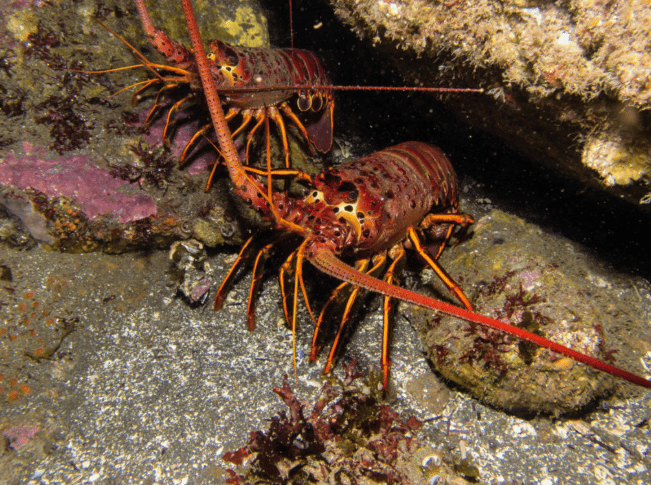
"Spiny lobster market crisis." The phrase shows up in the August 24, 2026 board minutes of the Commercial Fishermen of Santa Barbara. A board member reported that the issue had reached the new director of the U.S. Office of Seafood and the Department of Commerce. Both offices knew about it. Neither had acted. Earlier in the same meeting, a port economic impact study named lobster as the most valuable species landed in Santa Barbara, ahead of urchin, red and yellow rock crab, sablefish, and shortspine thornyhead.
The harbor's most valuable catch is going into a new season with its main buyer pulling back. Commercial spiny lobster season opened on Wednesday, October 7, 2026, and runs through March 17, 2027. For the next five months, the Saturday stalls on City Pier and the festival on Harbor Way are part of how the fleet stays afloat, not just a pleasant errand.
A Fishery Built Around One Export Buyer
The Channel's lobster has rarely stayed in the Channel. In an April 2025 Santa Barbara Independent report, Chris Voss, president of the Commercial Fishermen of Santa Barbara, said most Central California lobster, largely from the Santa Barbara Channel, had historically gone to China live. The same story said 45 fishers landed about 330,000 pounds at Santa Barbara Harbor the year before, worth about $7 million.
The trade numbers that followed show the problem is competition. Chinese demand for lobster held up. A U.S. Department of Agriculture report from April 2026 found that China's spiny lobster imports from the U.S. fell 52% in value during 2025, to $37 million. Over the same year, China's total spiny lobster imports rose 71% to $1.5 billion, and Vietnam alone supplied $764 million. The same report said China dropped its extra 25% tariff on Canadian lobster on March 1, 2026. That left Canada at 7%, while U.S. lobster still faced an effective 17% tariff.
So China's market for lobster grew sharply in 2025, and Santa Barbara's share of it shrank.
What That Did to the Price at the Dock
No one has yet published a Santa Barbara dockside price for the 2026-27 season. The nearest benchmark is San Diego during the 2025 season, and the drop there was large. In CBS8 reporting from October 2025, fishmonger Tommy Gomes said fishermen were getting $7 to $10 a pound, down from $20 to $24 the season before. A second CBS8 story put the opening buy price at Catalina Offshore at about $9 a pound, down from $24 to $30 in earlier years.
That second story also shows what local demand can do. Catalina Offshore co-owner Brittany Strangman told CBS8 the company ran a weekend sale at $11.99 a pound for retail customers, restaurants, and wholesale accounts alike, and sold out in under 48 hours.
Santa Barbara's fleet entered this season under its own long-running pressure. The port study in the August minutes found that fishermen's main struggles come down to rising operating costs and stagnant purchase prices. It counted 159 fishermen using the port of Santa Barbara in 2024, down from about 200 in 2014. It also estimated an average economic multiplier of about 1.6 for the port's main species. That figure covers the money spent locally on fuel, repairs, crew, and food beyond what the catch itself sells for. A pound of lobster sold on City Pier keeps working in the local economy after the sale.
Two Fixes, Neither in Place This Season
Two developments could change the picture. As of this October, neither has taken effect.
Measure | What it would do | Where it stands as of October 2026 |
|---|---|---|
U.S.-China "30-for-30" framework | Reciprocal tariff cuts on approved product lists of roughly $30 billion in goods per side | China's list includes lobster tariff lines, but the cuts go through each country's domestic legal process and no effective date is set |
Petition 2026-02, lobster tailing | Let permitted commercial fishers sell tails as well as whole or live lobster | Fish and Game Commission's Marine Resources Committee set a follow-up for March 2027 |
The framework's terms are dated September 27, 2026. China's product list includes headings for live, chilled, frozen, and dried "rock lobster and other lobster," but it doesn't name California spiny lobster specifically. Associated Press coverage published through U.S. News said more than 90% of listed products would move to China's most-favored-nation tariff rates. It gave no lobster-specific rate or start date.
The tailing petition matters more for the domestic market. Ava Schulenberg filed it in March 2026 for the California Lobster & Trap Fishermen's Association, asking for the rule to take effect on the first Wednesday of October 2026, which was this season's opener. The petition argues that requiring whole lobster limits where fishermen can sell. It says tails would store and ship better, spoil less, and reach domestic buyers who want frozen tails. It would not change season dates, size limits, trap limits, or how much is harvested. According to the Commission's August 2026 staff summary, fishermen pointed to unstable export markets and more frequent domoic acid outbreaks. They argued tailing could support local sales and reduce reliance on imported tails. The Santa Barbara board minutes say the committee pushed the item to March 2027 because CDFW lacked the staff time.
So for the whole 2026-27 season, Channel lobster sold in the U.S. will be sold whole and live. The Saturday market already sells it that way.
The Counter on City Pier
The Saturday Fishermen's Market sets up on City Pier, across from Brophy's at 6 Harbor Way, every Saturday of the year from 6 to 11 a.m. It runs rain or shine. The only exception is when Christmas falls on a Saturday. The Commercial Fishermen of Santa Barbara call it the harbor fleet's most direct link to consumers, and there's a fillet station on site for anyone who wants their fish prepped before the drive home.
This fall's catch, as listed on the market's vendor roster, includes:
- California spiny lobster
- Rock crab and spider crab
- Live red and purple urchin, sold for uni
- Rockfish, black cod (sablefish), halibut, and white seabass
The roster names Jace Kennedy, Joe Garrigan, Connor Streett, Ben Hyman, and Matt Liso among the sellers offering spiny lobster. It also posts each vendor's contact information, so you can pre-order before Saturday. The market says what's available depends on the season. Lobster is on the list now because the commercial season opened four days ago.
The recreational season opened even earlier, at 6 p.m. on Friday, October 2. Two hoop-net rules took effect on January 1, 2026. One bars disturbing, moving, or damaging another fisher's hoop net. The other bars using line markings that other West Coast fisheries require for their own gear. CDFW currently lists no toxin-related spiny lobster closures for commercial or recreational fishing.
October 17 on Harbor Way
Ten days after the commercial opener, on Saturday, October 17, the harbor throws it a public celebration. The 23rd annual Santa Barbara Harbor & Seafood Festival runs from 10 a.m. to 5 p.m. on Harbor Way. It's free, and the city says it's timed to celebrate the opening of lobster season. The city's page describes Santa Barbara as a working harbor where more than 100 commercial fishermen land millions of pounds of seafood each year, adding $30 million to the local economy.
The festival is presented by the city's Waterfront Department, the Santa Barbara Harbor Merchants' Association, and the Commercial Fishermen of Santa Barbara. Fishermen sell lobster, crab, and uni directly from City Pier. Food booths serve fish tacos, oysters, barbecued albacore, clam chowder, and seafood paella. Vessel tours and harbor boat rides are free.
The Marina Stage schedule is out:
Time | Act |
|---|---|
11 a.m. to noon | Bryan Titus Trio |
12:30 to 2:30 p.m. | Juan Dolor featuring Luis Conté |
3 to 5 p.m. | Spencer the Gardner |
As of this week, the city still lists the food vendors, the fishermen selling on City Pier, and the ocean outreach groups as "announced soon." If you want to see who's selling ahead of time, the Saturday market's vendor roster is the fleet's own published list. The first Saturday after the festival is October 24, and the stalls will be back on City Pier at 6 a.m. that morning.
The fishing families who work this harbor are part of the same community we serve. At Alemann & Associates, we follow the Waterfront's working side as closely as its views. If you're weighing a home near the harbor, or just want to know how the Waterfront you shop at is changing, we're glad to share what we know. Contact Us.
This article is general information, not legal, tax or financial advice. Consult a qualified professional about your situation.
Picture Credit: nationalfisherman.com